
Getting Greeley County Court Records
Every district-court file in Greeley County belongs to the District Court Clerk. For a first look at public case information, Kansas CaseSearch is the free starting point. One caution applies. The portal itself warns that its results are not the official court record. So treat a hit as a lead, not the file. Locally, the clerk works with requesters by phone, in person, by written request through the mail, and by fax. The court offers no public email box. It has no upload box for record requests either.
- Gather the case number, party name, approximate filing year, case type, and exact document needed.
- Check Kansas CaseSearch or the public computer in front of the Clerk’s Office for permitted case information.
- Contact the clerk by phone at 620-272-3652, visit 616 2nd Street in Tribune, mail P.O. Box 516, Tribune, KS 67879, or fax 620-376-2351.
- State whether the request is for a plain, file-stamped, or certified copy and ask the clerk to confirm cost.
- For a mailed certified or file-stamped return, include a postage-paid addressed envelope when local policy requires it.
When the Online Greeley Record Is Incomplete
Quick answer: Use the courthouse public computer when a permitted record is missing from the internet. Older cases may expose case information without online documents.
Searchable case information and filed court records are two different things, and the official district-court records explanation draws that line plainly. When the online docket leaves gaps, the page sends you to a courthouse terminal for the record itself.
Greeley's own policy sets public-access computers right outside the Clerk's Office. Visitors sign in first. A terminal can show permitted information the online docket omits, but no terminal opens a sealed or otherwise nonpublic record.
Court Record Types
A docket result is only an index. The court record is the set of documents actually filed in the case, and what you can get depends on the case and the access rules that apply. Records may include:
- Case information and chronological event entries
- Petitions, complaints, answers, motions, and other pleadings
- Signed orders, judgments, and disposition documents
- Public criminal, civil, domestic, probate, or traffic filings
- File-stamped or certified copies supplied by the clerk
- Older documents reproduced from microfilm
Some material follows separate rules or stays off limits entirely: transcripts, exhibits, investigative files, juvenile matters, and sealed documents. Ask for a named document instead of requesting everything.
District Court Clerk or County Clerk?
| Office | Records handled | Use it for |
|---|---|---|
| District Court Clerk | State court dockets and files | Court documents, certified records, terminal help |
| County Clerk | Elections and county administration | County-government records, not court files |
| Register of Deeds | Property instruments | Land and deed records |
| Sheriff | Law-enforcement records | Agency records rather than pleadings |
Several offices can share one courthouse address yet hold very different records. Faxing a district-court file request to the general county fax can slow it down; send court business through the court clerk's published channels.
Inside a Greeley County Court Record
Public case information tells you what a case is and helps you pick the right filing. What you can actually see varies with the case type, its age, and any access restrictions attached to it.
| Case Number | The primary identifier; use the complete value shown in CaseSearch. |
|---|---|
| Participants | Permitted party names, attorneys, and judge information. |
| Case Type | The category used to route and index the matter. |
| Events | A chronological index of filings, settings, orders, and disposition activity. |
| Hearing Dates | Listed settings where public; confirm time-sensitive dates with the clerk. |
| Documents | Pleadings, motions, orders, and judgments that are public and available. |
Greeley’s Three-Business-Day Response Rule
Under the Greeley Policy and Procedures page, the clerk has three business days to comply with a copy request and three business days to respond to an information request. That framework governs the response, not the paperwork itself. A large, archived, or restricted request may still take longer than the rule suggests. Treat 3:00 p.m. as a soft cutoff for pleadings handed over the counter. Anything later may wait until the next business day. Narrow requests get better results. Give the clerk a case number, name the document and whether it needs certification, and supply a sensible date range for older files.
Fees and Certified Copies
Know which copy you need before you order. A plain copy just reproduces a public document. A certified copy carries the clerk's certification and matters when an institution wants proof from the official file. A file-stamped copy is different again; it shows the clerk's filing mark. The court publishes no local search fee or exemplification fee, so ask the clerk about costs when you place the request.
| Item | Amount |
|---|---|
| Plain paper copy | $1 per page |
| Microfilm print | $1 per page |
| First certified copy for an attorney of record | No charge |
| Additional certified copy of that document for an attorney of record | $1 |
| Search or exemplification fee | Not published; confirm |
Greeley County District Court Clerk
616 2nd Street
Tribune, KS 67879
Mail: P.O. Box 516, Tribune, KS 67879
620-272-3652
Fax: 620-376-2351
Monday-Friday, 8:00 a.m.-4:00 p.m.
A Focused Written Request Works Better
The statewide Kansas court-record request form asks for your contact details, a precise description of what you want, and how you'd like delivery. It also lets the custodian state estimated reproduction costs up front. One local gap to note: Greeley publishes no email address for record requests, even though the form lists email as a delivery preference. Confirm a real address before sending personal information.
- Name the Greeley County District Court and case number.
- Identify each document and approximate filing date.
- Choose plain, certified, or file-stamped copies.
- Ask for a cost estimate when the page count is uncertain.
- Give a phone number for clarification and omit unnecessary Social Security or full birth-date data.
Written delivery earns its keep when you need several documents or an old file. Local policy allows requests in writing and by fax but promises no same-day handling. Keep your transmission record. Call the clerk if a deadline looms. A Kansas Open Records Act request still yields only what court-access rules permit; naming restricted material on a form does not unlock it. For mailed requests, the court's P.O. Box 516 is not the general county mailing address. Tell the clerk how to reach you about cost. Send no cash, and assume no card payment method the local court has not announced. Inspection, paper copies, and electronic delivery each carry their own limits. The limits depend on the source format. CaseSearch is not a criminal-history certificate. A name match may belong to someone else entirely, an expunged matter simply will not appear, and court files are not sheriff reports. For a Greeley case, the case number and document title make a request safer and more accurate than a broad name search.
eFlex Is for Filing, Not Public Search
The official Kansas eFlex portal is the state’s electronic filing system.
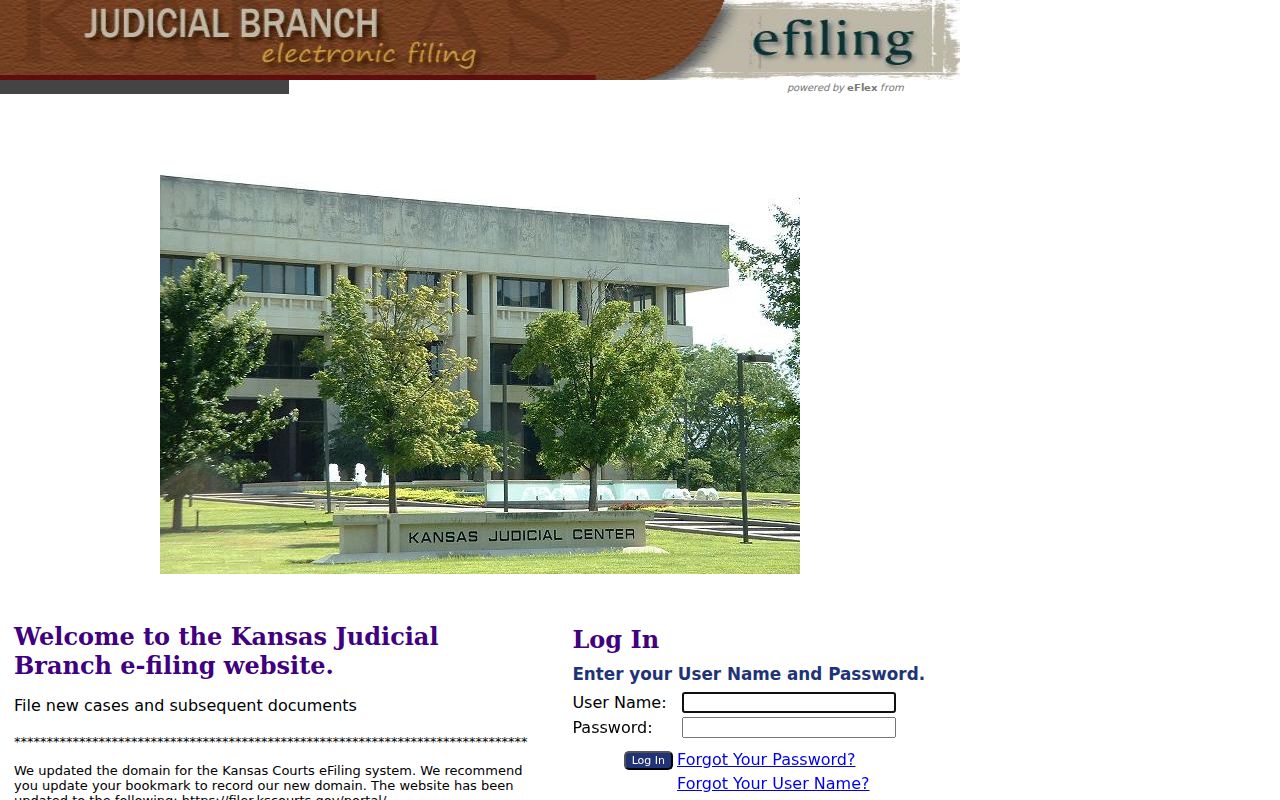
Don't build a filing workflow just to run a search. Start with CaseSearch, then move to the terminal or the clerk. A document filed electronically for a judge's attention is not a public-access request, even though it travels through the same system.
Sealed Records and Public Access
Kansas Supreme Court Rule 22 opens public outlets for permitted case information, including the portal and the courthouse terminal. Those outlets still honor every restriction created by statute, rule, court order, or seal. Adoption files, many juvenile and child-in-need-of-care records, expunged criminal records, grand-jury material, and certain investigative records never show up as ordinary public results.
Key rules:
Kansas Supreme Court Rule 22 governs public outlets and protected information.
K.S.A. 38-2309 restricts juvenile files.
K.S.A. 22-2410 limits disclosure after expungement.
K.S.A. 45-221 addresses exemptions and protected identifying information.
A blank portal result proves nothing. A file may exist and still be sealed. Ask the clerk what lawful access you have, but an ordinary request is not a way around a seal or a juvenile restriction.