
Searching the Tribune Court Docket
Read the issuing-court line first. There is no Tribune municipal search portal, calendar, or payment page online. For a city-ordinance matter, contact City Hall at 508 Broadway, Tribune, Kansas 67879, phone 620-376-4278. Ask which municipal office holds the docket. Ask which date or payment instructions apply.
- Read the court name, case or citation number, and appearance date on the paper.
- If it names a Tribune city matter, call City Hall and request the current municipal court route.
- If it names Greeley County District Court, search Kansas CaseSearch with District and Greeley County selected.
- Compare the public event with the official Greeley calendar and any filed notice.
- Call the District Court Clerk at 620-272-3652 when the state record is missing, incomplete, or date-sensitive.
A name match can pull up the wrong case. Searching by exact case number is stronger for a Tribune court docket. District cases also allow business, party-as-business, and citation searches.
Tribune City Hall Routes Cases
Tribune is the Greeley County seat and its larger incorporated city. The official 2020 Census place table reports 772 residents. Small size does not settle jurisdiction, though. The district courthouse and several public offices sit in Tribune, but a city citation can still demand a municipal route.
Tribune City Hall
508 Broadway
Tribune, KS 67879
620-376-4278
Ask which court issued a city citation, who keeps its docket, where a hearing is held, and how a copy or payment is handled.
The official city page identifies the published City Hall route:
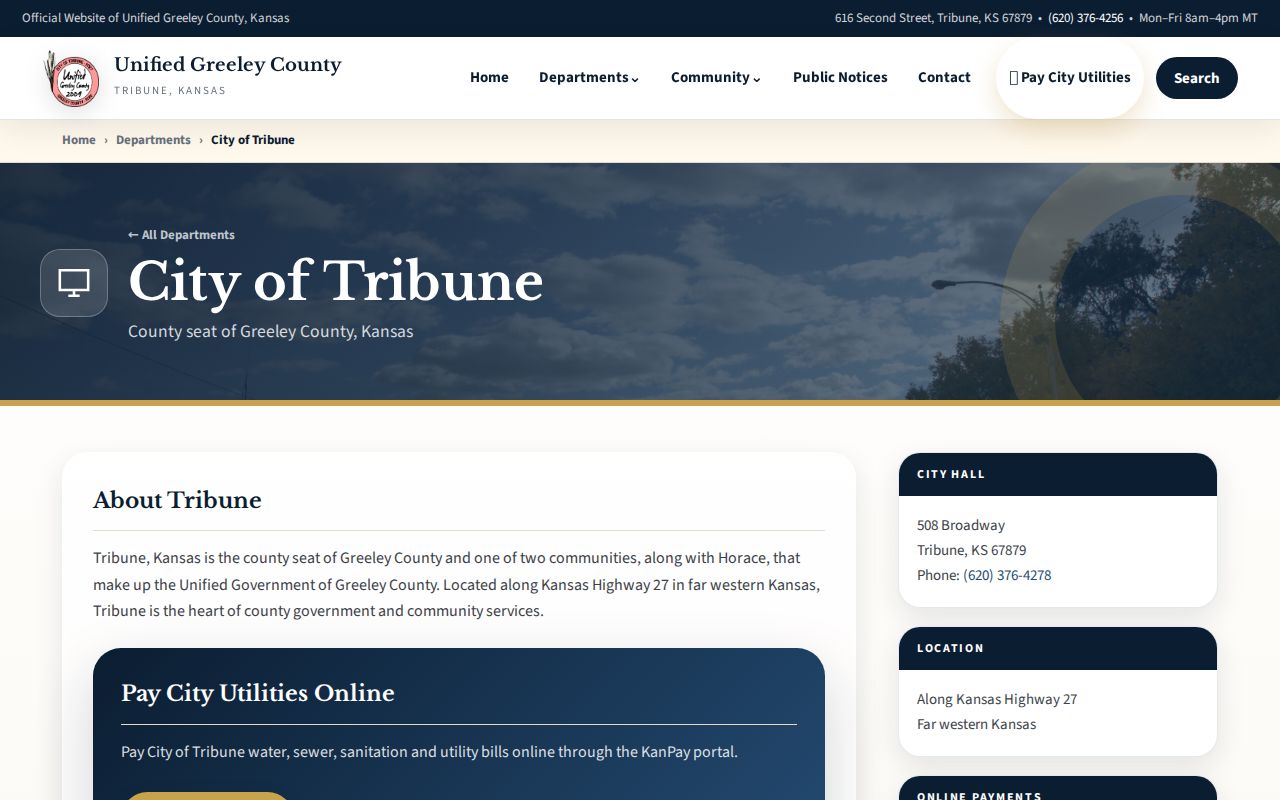
No current municipal judge or clerk is named, and no municipal docket form appears anywhere. Treat those as open questions. They are not proof that a municipal court or record is missing.
Tribune Municipal Court Basics
Kansas municipal courts handle city-ordinance matters. K.S.A. 12-4106 describes a municipal docket model covering the accused and complainant, the offense, the trial date, witnesses, the finding, judgment or sentence, payment or commitment, and other material facts. That law shows what a municipal record can contain. It does not prove Tribune publishes those fields online. No official source identifies Tribune municipal court days, a court building, judge, clerk, fee schedule, or copy procedure. Ask City Hall for the current custodian and instructions. Never copy statewide district portal fields into a request and label them Tribune municipal fields.
Research gap: The Tribune municipal court posts no docket, calendar, or payment page, and it publishes no judge, clerk, or fee schedule.
Tribune and County Government United
The official county board page states a key fact. It says Greeley County and the City of Tribune united on January 1, 2009. That history explains something. City and county information share one government site. It does not turn every city record into a district-court record. Nor does it make the County Clerk the court clerk. The District Court Clerk keeps state court dockets and files. The County Clerk handles elections, county administration, and real-estate administration. City Hall is the starting point for an unresolved Tribune municipal question. Naming the custodian prevents delay and keeps a records request at the right desk. Tribune's county-seat role is useful as a location fact only. Jurisdiction still turns on the court named in the case or citation.
Court Dates and Settings in Tribune
Tribune posts no separate municipal calendar. For a city matter, use the date printed on the citation. Confirm it through City Hall. A state district setting can be checked on the Greeley County District Court calendar. The calendar offers date-range, terms, past-event, and calendar controls. Call the district clerk when attendance depends on the result.
| Date | Use the current date on the notice or official calendar, not an old search result. |
|---|---|
| Time | Confirm the published time and preserve the court's time-zone wording. |
| Location | Ask whether the event is municipal or at the active district courthouse. |
| Court | The issuing court controls the docket, payment route, and appearance. |
| Setting Type | Identify whether it is an arraignment, motion, pretrial event, trial, or other hearing. |
A reset is not a dismissal. Compare the calendar against the filed notice or order, and verify any change with the proper clerk before relying on it.
Tribune Courthouse Service Point
The active Greeley County District Court sits at 616 2nd Street in Tribune. Its clerk lists P.O. Box 516. The phone is 620-272-3652, and the fax is 620-376-2351. Weekday hours run 8:00 a.m. to 4:00 p.m. Local policy provides a public computer in front of the Clerk's Office. Visitors sign in and may view permitted public material. The Greeley policy allows requests by phone, in person, writing, and fax. It includes a three-business-day response statement. Paper and microfilm prints are listed at $1 per page. These district rules do not set Tribune municipal fees. Certain mailed certified or file-stamped returns require a postage-paid addressed envelope. Use the clerk counter for the official state file. It also serves an older record, a missing online image, or a certified-copy question.
Traffic Tickets in Tribune
Read the issuing court before paying a Tribune ticket. A city-ordinance citation may need municipal instructions from City Hall. A state-law citation assigned to Greeley County District Court may appear in Kansas CaseSearch. It may also qualify for the Kansas Courts Central Payment Center. That state service is not confirmed to accept every Tribune city citation. For an eligible state case, the Central Payment Center search offers citation or case number and other matching fields. A portal match does not erase the right to contest. Payment may carry legal effects. Follow the cited court's instructions and deadline. When eligibility is unclear, the right office depends on the court. Call City Hall for a city route. Call the District Court Clerk for a state route. The county-wide Greeley County traffic ticket records cover state citation searches in more detail.
Two Tribune Courthouse Buildings
Tribune has two courthouse buildings. Mixing them up will cost you a trip. The working one is the Greeley County District Court at 616 2nd Street. That is where a court docket, a filing, or a hearing actually lives. The other, at Harper and Third, is the Old Greeley County Courthouse. The National Register-listed building now serves as a museum. The official county home source gives a visual sense of Tribune and its county government.
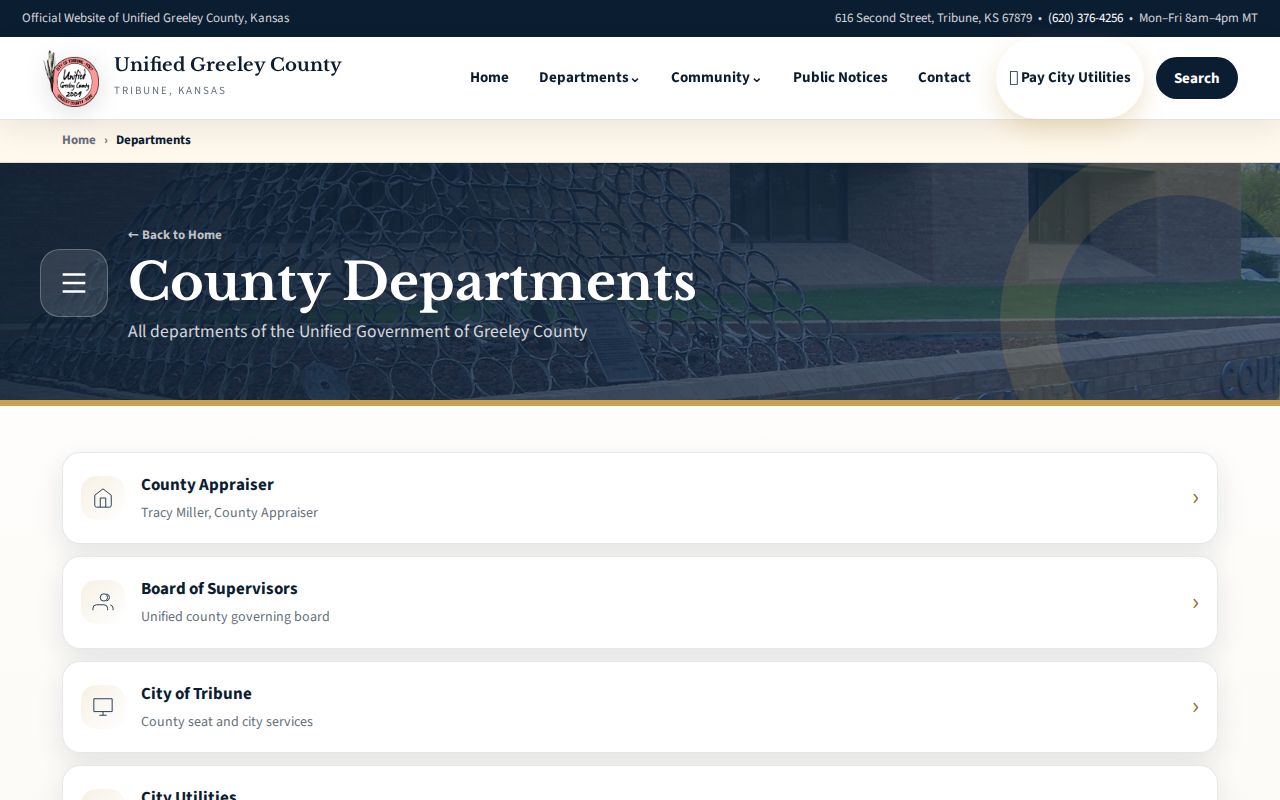
Tribune's role as county seat helps explain why these offices cluster here. Still, take a live case to the active District Court address. The official sheriff source shows one more county office sitting separately in town.
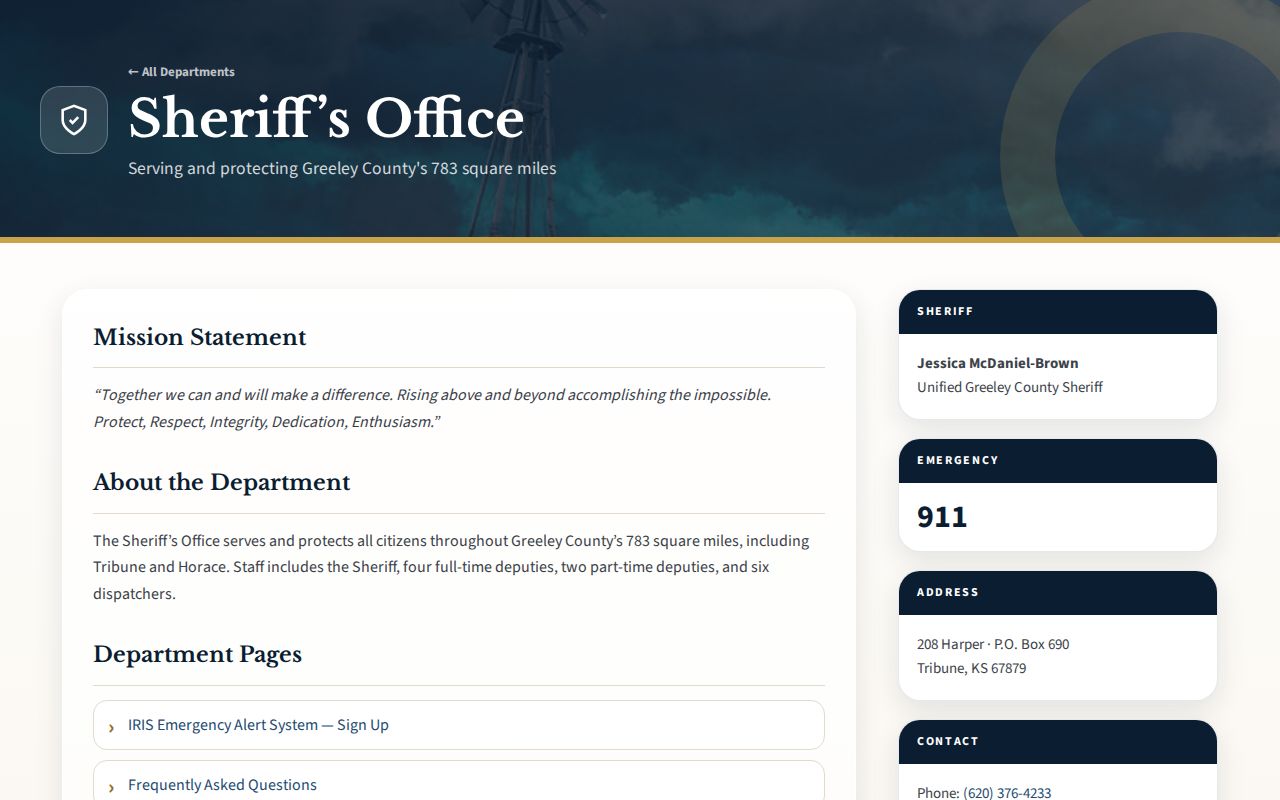
Keep the records straight. A sheriff report is a law-enforcement record, not a court docket and not proof of disposition.
Where Tribune Cases Go
Where a Tribune case goes depends on which law it falls under. City ordinance matters run through the municipal route. City Hall confirms this. State-law criminal, traffic, civil, family, and probate cases belong to Greeley County District Court. Appeals follow Kansas appellate procedure. Federal cases go to the District of Kansas. That court is not Kansas CaseSearch.
Docket flow: Tribune Municipal Court › Greeley County courts › Greeley County District Court
Treat this as a routing aid. Not every city matter becomes a district case. Start with the court that issued the paper, and if it turns out to be a state matter, the Greeley County case lookup lays out the county-level search steps.
Tribune State CaseSearch Fallback
For a Tribune resident's state case, Kansas CaseSearch is the fallback. Choose District. Pick Greeley County in the county field. Try the full case number first. Party Name, Business Name, Party As Business Name, and Citation Number are other current options. Filters cover case type, date of birth, and filing dates. These can narrow a busy docket search.
Remember that the portal is not the official court record. It may show case information yet hold back a document image. Older cases can carry an index with few online images. A blank result might mean nothing more than a typo. It could be the wrong search type, a county filter, the human check, or a restricted category.
When the online path dead-ends, go to the courthouse terminal or ask the clerk. Bring the case number and know which document or event you need.
Tribune Citation Questions to Ask
A short, precise call beats guessing which court holds the file. Have the citation in hand. Ask only what you need to route it, and never send a Social Security number or other needless identifier through an unconfirmed channel.
- Which court issued this Tribune citation?
- Who is the current municipal or district docket custodian?
- What hearing date and location control?
- Is there an official search or payment route for this exact case?
- How can a permitted copy be requested, and what fee applies?
Split the call by court. City Hall answers routing questions for unresolved city matters; the District Court Clerk handles state-file questions. That simple division keeps you from mailing money or lining up at the wrong counter.
Tribune Court Record Access Rules
Kansas statutes, court rules, seals, and orders shape what the public can see. Some categories stay off a public portal, including adoption, juvenile, child-in-need-of-care, expunged, grand-jury, search-warrant, protection, and certain mental-health material. Parties and people with a court order may reach records a general requester cannot.
Key rules:
Kansas Supreme Court Rule 22 defines public court-record outlets and nonpublic limits.
K.S.A. 45-221 addresses exemptions and removal of identifying material where applicable.
K.S.A. 12-4106 describes fields kept in a Kansas municipal docket.
Ask the right office whether a redacted record can be released. And never read a blank Tribune docket search as proof that no case exists.
Tribune Docket Route Check
Before hanging up, repeat a few things. Say the court name, file number, date, location, and the office holding the file. That quick check stops a Tribune municipal question from landing on the district clerk's desk. It also keeps a district record request from going to City Hall. Jot down the office name and its current instructions beside the citation.
One caution deserves to stay front of mind. The district route is documented. The municipal details remain unconfirmed online. Hold that distinction until an official local source fills the gap.